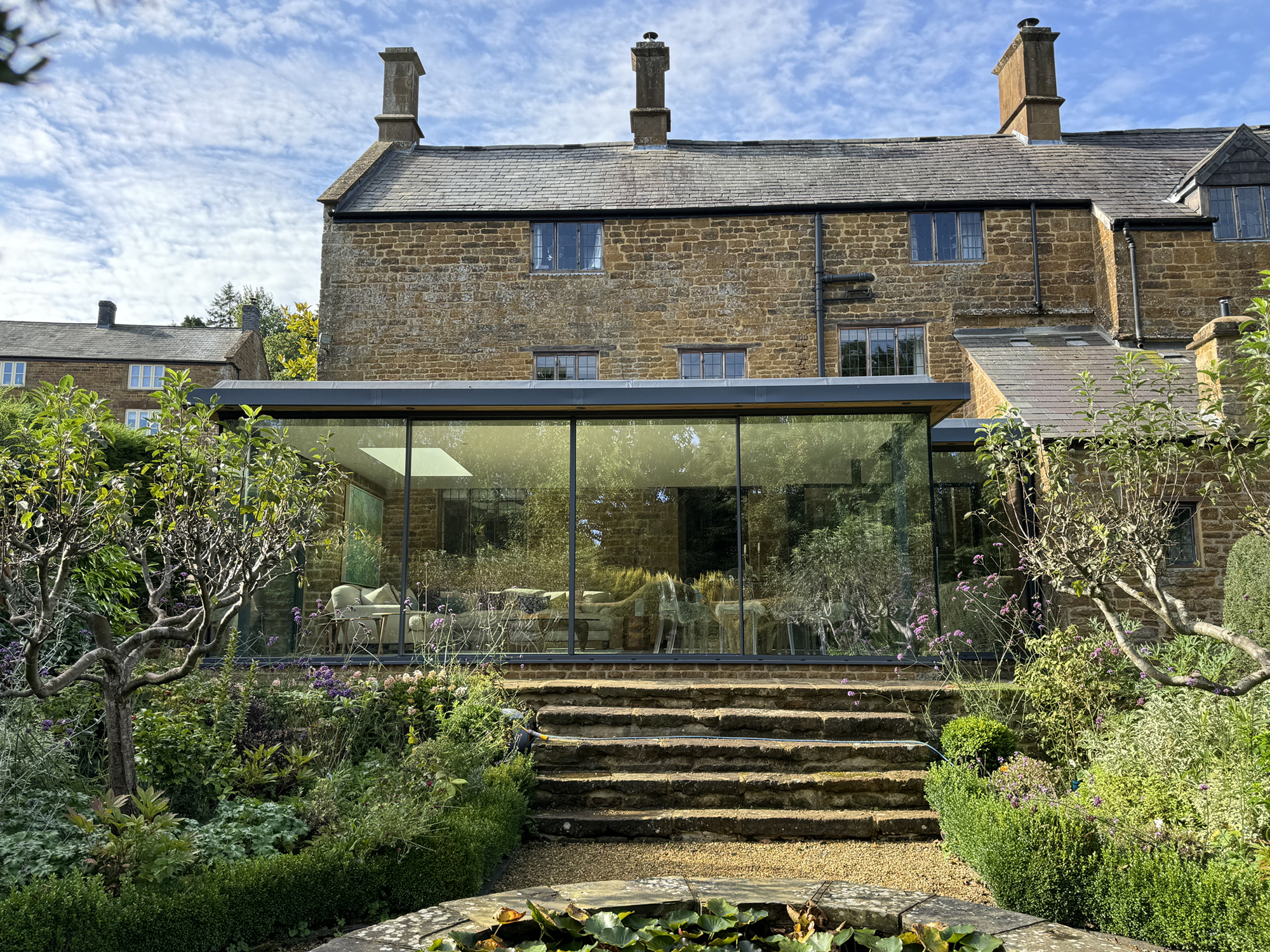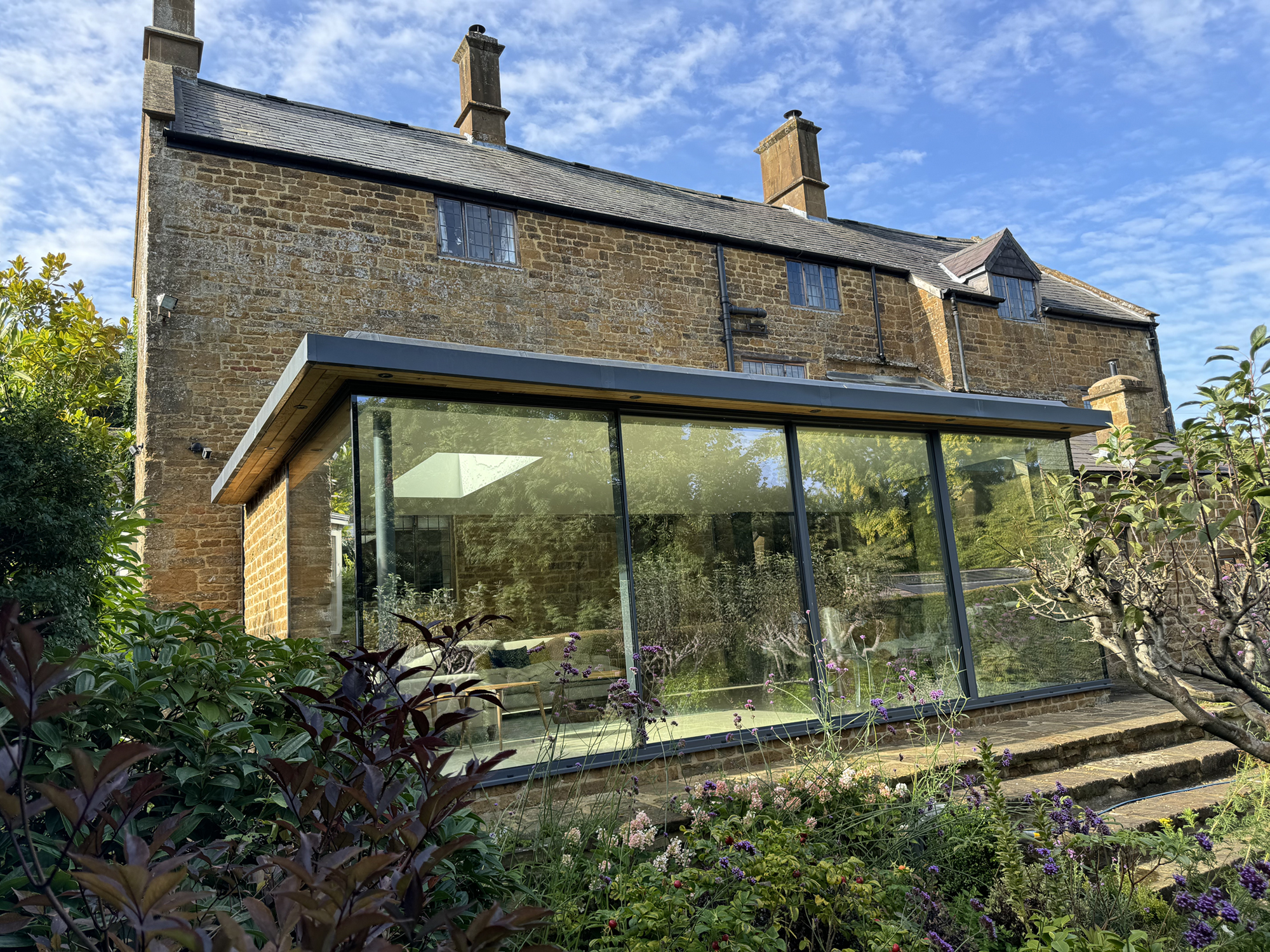

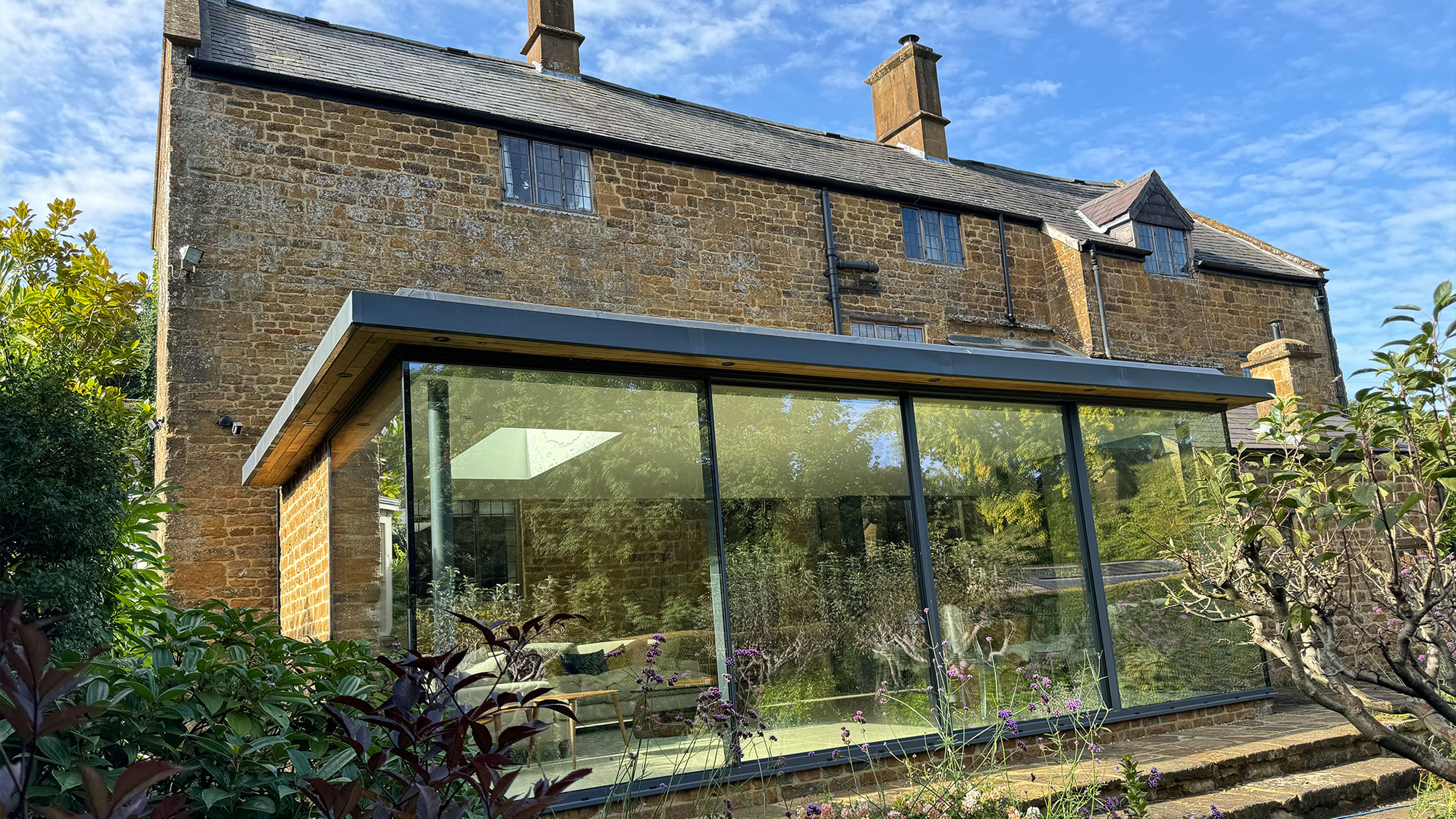
The choice of extension design can usually vary depending on the style of the existing property. Some clients want to create an extension that closely resembles the materials and design appearance to the existing property. However, it is also quite common to create elements that have a different style to the existing property.
Contemporary design is not limited to “grand design” houses, and is equally effective on traditional properties. Contemporary design works really well when it comes to creating single storey additions to properties, as the more modern design approach generally allows for larger expenses of glazing. If you create a more traditional extension, then window proportions tend to be relatively limited, while with contemporary design, the skies the limit.
One of the areas where contemporary design excels is when it is paired with a listed building. Listed building officers generally prefer extensions that complement the property’s existing style rather than attempting to replicate it. The argument with this philosophy is to ensure that in future years an extension can be clearly read as an addition to the property, which helps show the property’s historical character and history.
Frameless glass can an effective way of joining an extension to a listed building without compromising the building’s fabric. This type of extension is classed by the building officer as a element that could be reversible without causing harm to the fabric.
We believe that contemporary extensions work incredibly well with listed buildings, they give a completely different feel to the way spaced is used, and as described above, because they can quite often a substantial amount of glass, they are generally the complete opposite of an old listed property, which has much smaller windows.
Presentation of drawings is a critical aspect of contemporary design work. We take great pride in creating drawings that provide a comprehensive understanding of the proposed design to the building officer.